
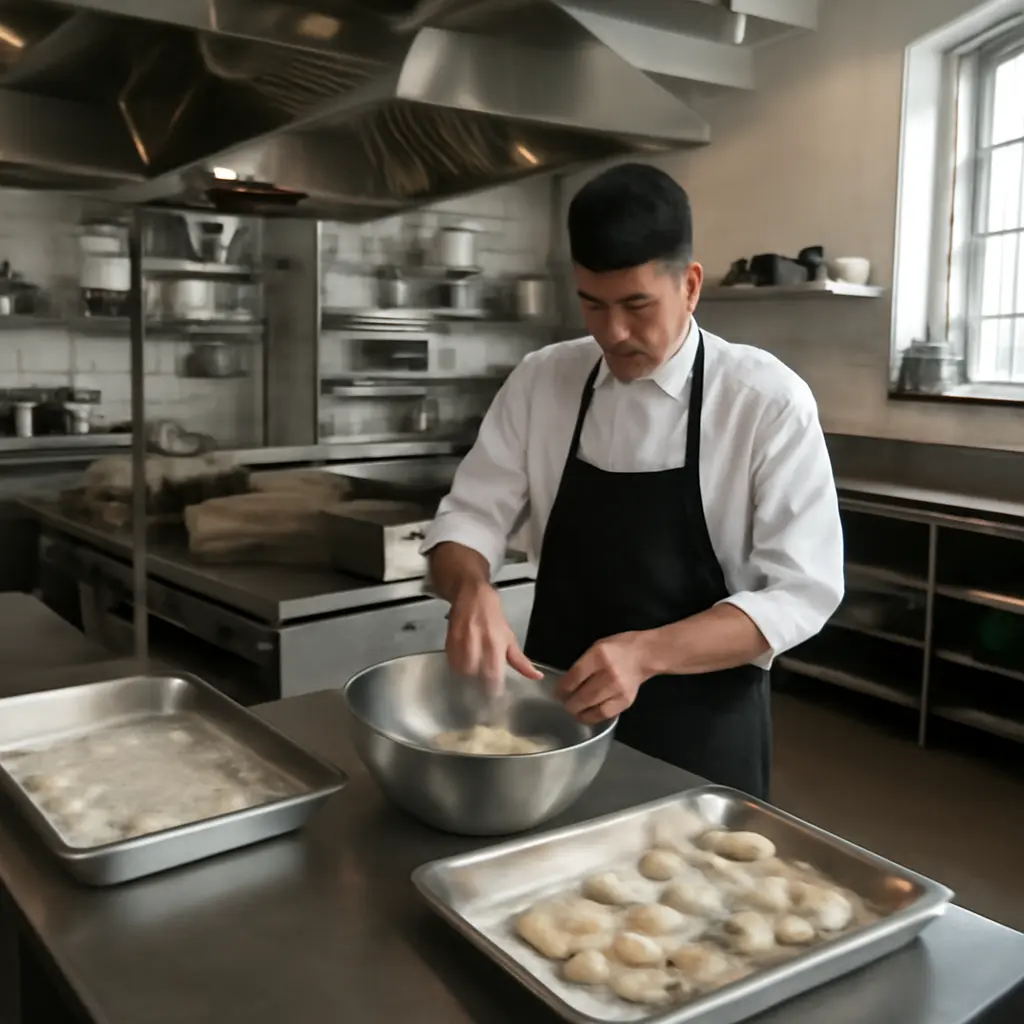
Restaurant kitchens approach fried shrimp batter as a production system, not just a recipe: they choose a coating that suits the shrimp and equipment, prepare it to order or in controlled batches, and manage oil temperature, timing, and food safety through the rush. The U.S. Food and Drug Administration’s Food Code sets a 145°F (63°C) minimum internal temperature for fish, while the U.S. Department of Agriculture recommends keeping hot food at 140°F (60°C) or above after cooking. Those benchmarks help explain why kitchens balance crispness with safe, consistent service. The sections below distinguish common batter styles, show how stations control quality at peak volume, and outline practical ways to troubleshoot and verify results.
Fried shrimp batter methods in restaurant peak service
A fried shrimp batter is a coating mixture—commonly flour, starch, liquid, and seasonings—that adheres to shrimp and sets into a cooked exterior in hot oil. There is no single authoritative culinary definition for restaurant batter; in practice, kitchens distinguish batter from dry breading by whether the coating includes a liquid mixture. Batter may be thin and crisp, thick and puffy, or used as one layer in a multistep coating.
In peak service, the method must work at the same time as the order queue, fryer capacity, and holding plan. Kitchens therefore evaluate more than flavor: they consider coating adhesion, pickup speed, portion consistency, oil recovery, and how quickly the crust softens after frying. The National Restaurant Association’s industry reporting describes persistent operator attention to labor, costs, and operating efficiency; those pressures make repeatable, low-friction station routines especially valuable.
Wet batter, dredge, and hybrid coatings
Wet batter is a pourable or spoonable mixture into which shrimp are dipped before frying. A dry dredge is flour or starch applied directly to the shrimp, while a hybrid coating uses a dry layer before wet batter or breadcrumbs afterward. Each is a different route to a crisp surface: a light batter can produce a delicate shell, whereas a thicker batter or crumb layer gives a more substantial crunch.
For a made-to-order wet-batter station, cooks usually drain and dry shrimp before dipping, then allow excess batter to drip off. This limits clumps and helps avoid loose coating in the fryer. In a hybrid method, the first dry layer can help the wet coating grip, but extra handling and ingredients may slow service. The best choice depends on the restaurant’s menu promise and throughput rather than on a universal rule.
Flour, starch, and leavening choices
Flour provides structure; starches such as cornstarch can make a coating feel lighter and more brittle; and leavening may create a more open, puffed crust. These ingredients influence texture, color, and how quickly the crust sets. The effect also depends on batter thickness, mixing, shrimp moisture, and frying conditions, so changing one ingredient should be tested in the actual fryer and service window.
Some kitchens use cold liquid or carbonated liquid in batter to support a light texture. Such choices are process variables, not guarantees: batter that sits too long can change in consistency, and overmixing may develop more gluten in wheat-based mixtures, making the coating tougher. A practical station standard records the recipe by weight, target consistency, and discard or refresh interval rather than relying on an informal “add flour until it looks right” instruction.
Seasoning and allergen control
Seasoning may be built into the batter, added to the dredge, or applied immediately after frying. Applying some salt after frying can help it adhere to the hot crust, while seasoning the batter distributes flavor across the coating. Kitchens should keep the seasoning profile consistent and make sure the shrimp itself is not excessively wet from brining or thawing, which can weaken adhesion.
Batter also creates allergen and cross-contact considerations. Wheat is a major food allergen in the United States, and shrimp is a crustacean shellfish allergen. The FDA Food Code provides model requirements for food-service operations, while local adoption and enforcement vary. Restaurants should follow their jurisdiction’s rules, accurately communicate ingredients, and use the establishment’s allergen procedures and designated equipment when a guest reports an allergy.
Peak-service controls for fried shrimp batter
Once a kitchen selects a coating, the challenge shifts from recipe design to control at the fryer. A stable process connects receiving and thawing, portioning, batter preparation, frying, draining, and delivery. The bridge between a good batter and a dependable plate is station discipline: the same shrimp size, coating amount, fryer load, and doneness check should produce a similar result across cooks and shifts.
Batter consistency and mise en place
Batter consistency is the mixture’s ability to coat shrimp evenly without running off completely or forming an overly thick shell. A kitchen can standardize it with weighed ingredients, a fixed mixing sequence, a labeled batch time, and a simple visual check using a test shrimp. Smaller batches may be easier to keep uniform during a rush, while larger batches reduce replenishment tasks; the right batch size depends on order volume, staff, and food-safety procedures.
A useful mise en place plan separates raw shrimp, batter, clean landing trays, and cooked product to limit cross-contamination. Staff should not return cooked shrimp to a raw-product tray or reuse batter contaminated by raw seafood unless the operation’s approved food-safety process specifically permits it. For high-volume service, a clearly marked discard time and a fresh-batch trigger help prevent an old, thickened mixture from being used simply because it remains on the station.
Oil temperature, fryer loading, and timing
Oil temperature is the fryer’s measured temperature before and during cooking. Shrimp baskets lower oil temperature, and overcrowding can slow recovery, encourage uneven cooking, and leave coatings greasy or pale. Restaurants should follow the fryer manufacturer’s operating guidance and test a consistent portion size, load, and cook time on their own equipment. A nominal set point alone does not guarantee the same result across fryers, oil conditions, or product sizes.
A station can manage demand by frying in controlled batches, avoiding basket overload, and coordinating drop times with the rest of the ticket. The FDA Food Code specifies that fish should reach an internal temperature of 145°F (63°C) for 15 seconds under its model provisions. Shrimp is a finfish-free seafood product, but it is still covered by the Food Code’s fish cooking provisions; operators must verify the applicable local code and follow their approved food-safety plan. The USDA’s consumer guidance also advises cooking fish and shellfish to 145°F (63°C).
Draining, holding, and crispness at handoff
After frying, shrimp should be drained so excess oil does not pool around the crust. A rack generally permits airflow around the product, whereas a flat absorbent surface may trap steam beneath it. Holding time should be minimized: steam migrates into the crust, and enclosed packaging can accelerate softening. A kitchen’s exact holding method should be tested against its food-safety plan and service requirements, not assumed from appearance alone.
The USDA advises keeping hot food at 140°F (60°C) or above, and the FDA Food Code model uses 135°F (57°C) as the minimum for hot holding. These are different guidance and regulatory contexts, not interchangeable numbers; restaurants should follow the local code and their approved procedures. For best eating quality, the operational goal is to serve fried shrimp promptly while maintaining required time and temperature controls.
Peak-volume workflow and quality checks
A peak-service workflow assigns clear roles: one cook portions and coats, another manages fryer drops and timing, and a runner or finishing cook checks orders and sauces. Smaller operations may combine roles, but the steps should remain explicit. A ticket-time chart or station checklist can identify bottlenecks such as repeated batter mixing, slow basket recovery, or waiting for garnish.
Quality checks can be simple and measurable: portion count, cooked appearance, coating adhesion, doneness, and time from fryer to pass. Managers can record complaints and remakes by shift to see whether problems cluster around a specific fryer, batter batch, shrimp size, or service period. Such records turn “the shrimp were soggy” into a troubleshooting question that the team can investigate.
Common fried shrimp batter failures and practical fixes
When a plate misses the mark, the coating is only one possible cause. Moisture on the shrimp, a batter outside its target consistency, excessive basket loading, unstable oil temperature, and delayed service can produce similar symptoms. Troubleshooting works best when cooks change one variable at a time and note the result.
Coating slips off or forms bare patches
A coating may slide when shrimp carry surface water, when the batter is too thin, or when the product is not drained consistently. Pat shrimp dry according to the kitchen’s handling procedure, check the batter against its standard, and avoid overloading the dipping vessel. If using a hybrid coating, confirm that the first dry layer is even rather than caked.
Crust turns greasy, pale, or too dark
A greasy or pale crust can indicate poor oil recovery, a heavy load, or batter that coats too thickly; a dark crust can result from excessive cooking time, a high effective oil temperature, or degraded oil. Verify the fryer with its recommended temperature-check method, reduce basket loads if recovery is slow, and inspect oil condition under the restaurant’s maintenance schedule. Changing the recipe before checking fryer performance can mask the underlying problem.
Shrimp is overcooked or crust softens before service
Shrimp cook quickly, so an overly long timer or a large variation in shrimp size can lead to a tough center even when the crust looks attractive. Standardize size and portioning, validate the cook process with a calibrated thermometer where required, and align fryer drops with the ticket. If the crust softens, reduce the wait between frying and handoff, improve draining and airflow, and avoid sealing hot shrimp in packaging that traps steam.
Conclusion: fried shrimp batter as a repeatable service system
Restaurant kitchens manage fried shrimp batter by matching the coating style to the menu, standardizing ingredients and batch handling, controlling fryer loads and temperature, and minimizing the delay between cooking and service. Wet batter, dredges, and hybrid coatings offer different textures, but none can compensate for wet shrimp, inconsistent portions, or poor station coordination. Food-safety benchmarks from the FDA Food Code and USDA guidance also remind operators that a crisp plate must still meet applicable cooking, holding, and allergen-control requirements.
For a practical next step, document one standard recipe and station sequence, then test them during both quiet and peak periods. Track portion size, batch age, fryer conditions, ticket time, and guest feedback; use those records to adjust the process rather than relying on guesswork. For additional context, consult the current FDA Food Code, USDA food-safety guidance, and your local health department’s rules.
Sources: U.S. Food and Drug Administration, 2022 Food Code, https://www.fda.gov/food/fda-food-code/food-code-2022; U.S. Department of Agriculture, Safe Minimum Internal Temperature Chart, https://www.foodsafety.gov/food-safety-charts/safe-minimum-internal-temperatures; U.S. Department of Agriculture, Keep Food Safe! Food Safety Basics, https://www.fsis.usda.gov/food-safety/safe-food-handling-and-preparation/food-safety-basics/keep-food-safe-food-safety-basics; U.S. Food and Drug Administration, Food Allergies, https://www.fda.gov/food/food-labeling-nutrition/food-allergies; National Restaurant Association, Research and Reports, https://restaurant.org/research-and-media/research/


