
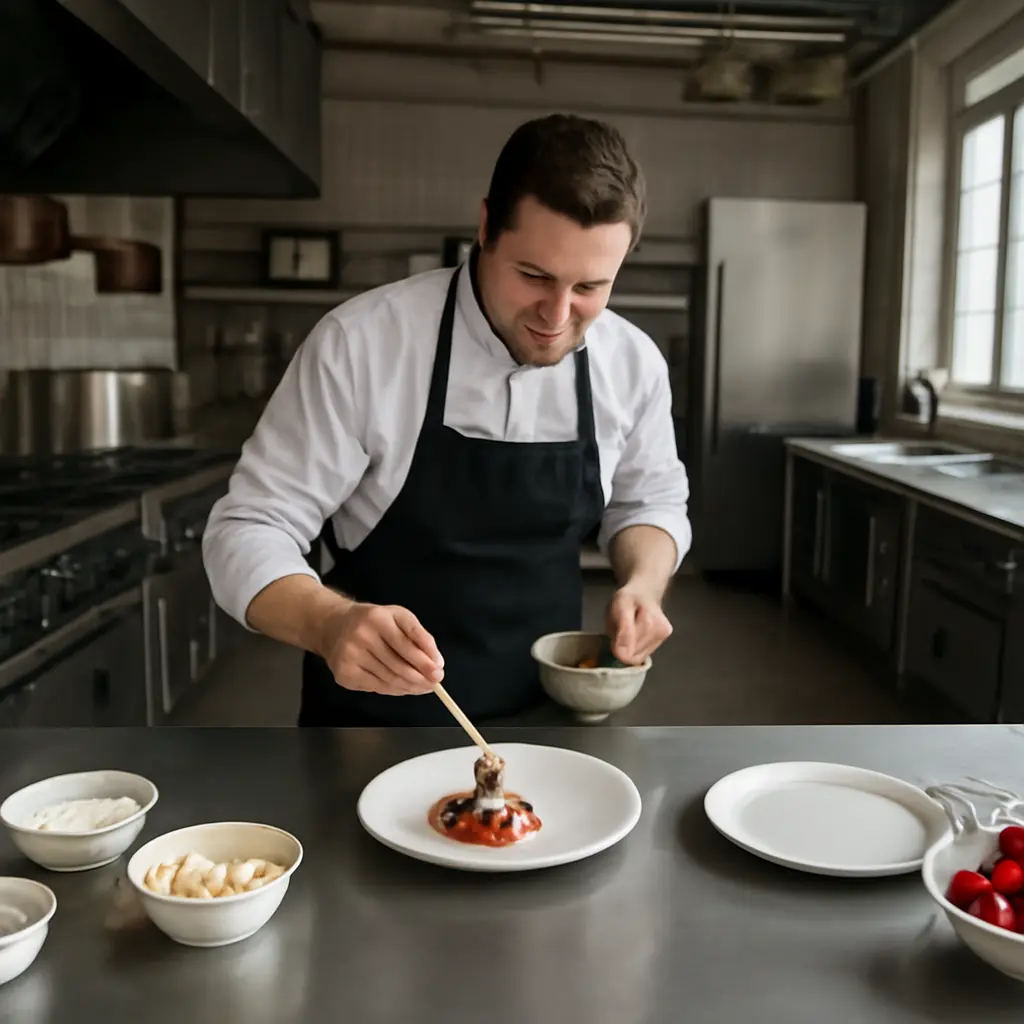
Pastry chefs plan dessert timing around busy evening service by preparing components ahead, matching each dessert’s finishing time to the pace of the meal, and coordinating closely with the front-of-house team. The strategy matters because restaurant work is time-sensitive: the U.S. Bureau of Labor Statistics reports that food preparation and serving occupations commonly involve fast-paced work and irregular schedules. A reliable dessert plan can help kitchens serve sweets at their intended temperature and texture, reduce bottlenecks at the pass, and make the final course feel considered rather than rushed.
Pastry chefs use mise en place to control dessert timing
Mise en place means organizing and preparing ingredients, tools, and workstations before service. The Culinary Institute of America describes it as a foundational kitchen practice: a way to put needed ingredients and equipment in place so cooks can work efficiently and consistently. For pastry teams, that preparation may include portioning dough, filling piping bags, setting garnishes, tempering chocolate, and labeling components by station and service date.
The key is to prepare what can be prepared without compromising quality, then reserve delicate or temperature-sensitive steps for the moment of service. Desserts often combine components with very different holding needs, such as frozen sorbet, room-temperature cake, and a hot sauce. Planning those components separately gives the pastry cook more control over the final plate.
Batch preparation and component holding
Batch preparation is the advance production of components that can be safely stored and finished later. A pastry team might bake tart shells before dinner, chill pastry cream, and portion fruit for garnish, while leaving the shell filling and final assembly until an order arrives. This separates labor-intensive work from the short window when a dessert ticket must be completed.
Food safety remains part of the timing plan. The U.S. Food and Drug Administration’s Food Code sets cold-holding standards for time/temperature control for safety foods, and restaurants use food-safety procedures to manage cooling, refrigeration, labeling, and discard times. Chefs should follow applicable local rules and their establishment’s food-safety plan rather than relying on appearance or memory.
Par levels and production forecasts
A par level is the target quantity of a prepared item needed to cover expected demand. Pastry chefs estimate pars using reservations, historical sales, the menu mix, special events, and the amount of each component that can be replenished during service. Forecasting helps avoid both a sold-out signature dessert and unnecessary end-of-night waste.
The National Restaurant Association’s industry reporting has repeatedly identified labor, food costs, and operational efficiency as important pressures for restaurants. For a pastry station, a useful forecast is therefore practical as well as culinary: it helps allocate prep hours, ingredients, refrigerator space, and staff attention to the items most likely to sell.
Pastry chefs match dessert finishing time to service flow
Service flow is the sequence and pace at which orders move from the dining room to the kitchen and back to guests. Pastry chefs plan around that flow by distinguishing desserts that can be plated quickly from those that require baking, frying, flambéing, or other last-minute work. The practical aim is not to make every dessert identical in speed, but to know how long each one takes and when its preparation should begin.
This timing is especially important during a rush, when several tables may finish their main courses at once. A dessert station that receives clear ticket information and has its components organized can work in parallel with the hot line instead of waiting until every other course is complete.
Quick-assembly and make-to-order desserts
Quick-assembly desserts are built from ready-to-serve components, such as pre-portioned cake, chilled custard, fruit, and a prepared sauce. Make-to-order desserts require a cooking step after the ticket arrives, such as baking a soufflé or frying dough. These categories are useful planning labels, not rigid menu rules: a chef may prepare a soufflé base in advance while still baking each portion to order.
For each menu item, the pastry team can record expected pickup time, required equipment, and any handoff dependencies. A plated dessert that takes two minutes to assemble can help the station keep pace while a longer bake is underway, provided the quick item is not allowed to sit so long that its texture or temperature suffers.
Hot, cold, and frozen dessert timing
Temperature determines how long a dessert can wait after finishing. Ice cream and sorbet can melt quickly on a warm plate, while fried elements lose crispness as steam softens their surface. Warm cakes, sauces, and baked custards may also change in texture during holding. Chefs therefore sequence plates so that the most time-sensitive components are added last and sent immediately.
A simple station chart can show which components are held chilled, frozen, at room temperature, or hot, along with the finishing order. The chart is a practical visual aid rather than a universal standard; each kitchen should test its own recipes, plates, and equipment under realistic service conditions.
Ticket pacing and dining-room communication
Ticket pacing is the coordination of order timing between the dining room and kitchen. Servers can help by communicating whether a table wants dessert immediately, after a pause, or alongside coffee. Chefs can return that clarity by notifying the service team when an item has a longer pickup time or when a component is running low.
This communication also supports guest experience. A birthday dessert, tasting-menu course, or allergy-sensitive plate may need a specific presentation or sequence. Confirming the request before the rush reduces avoidable remakes and gives the pastry team time to check ingredients and prevent cross-contact in line with the restaurant’s procedures.
Pastry chefs build a station that can withstand the rush
A pastry station is the workspace, equipment, and inventory arrangement used to prepare and plate desserts. Its setup affects both speed and consistency: frequently used tools should be accessible, plates should be ready, and components should be clearly identified. A well-designed station makes the intended sequence of work easy to follow even when multiple tickets arrive together.
Station layout and task sequencing
Task sequencing means arranging work in a logical order to avoid unnecessary movement and delays. For example, a cook can place the plate, add a room-temperature cake, apply sauce, and finish with a frozen garnish just before the plate leaves the pass. Keeping garnish tools, squeeze bottles, and spoons in consistent locations reduces searching and helps different team members follow the same method.
The U.S. Bureau of Labor Statistics notes that food preparation and serving roles involve teamwork, physical activity, and time pressure. A clear station layout is one operational response to those conditions: it makes handoffs more predictable and can make training easier when a relief cook joins the service.
Cross-training and contingency planning
Cross-training teaches more than one team member to complete essential tasks, such as plating a signature dessert, replenishing a sauce, or checking a special-diet ticket. It reduces dependence on a single person and allows the station to adapt when staffing changes or service volume rises unexpectedly.
Contingency plans can cover a delayed oven, a sold-out garnish, a refrigerator issue, or a sudden surge in orders. The chef may identify an approved substitute, limit a labor-intensive item when stock is nearly depleted, or communicate an updated wait time to the dining room. Any substitution should preserve food safety and accurately reflect what the guest will receive.
Quality checks and end-of-service review
Quality checks are brief inspections of portion size, temperature, appearance, and ticket accuracy before a dessert leaves the kitchen. A consistent check helps catch missing garnishes, smudged plates, and incorrect modifications without adding a long pause to the pass. Teams can define a small number of non-negotiable checks for each menu item.
After service, chefs can compare forecasted and actual sales, note delays, record waste, and gather feedback from servers. This review turns timing into an ongoing improvement cycle: adjust pars, change a component’s prep schedule, or simplify a plating step where the evidence points to a recurring bottleneck.
Conclusion: Dessert timing supports quality and a smoother service
Pastry chefs manage busy evening service by combining mise en place, realistic production forecasts, clear service-flow plans, and an organized station. Batch preparation and par levels make demand easier to anticipate; ticket pacing and temperature-aware finishing protect texture and presentation; cross-training and post-service reviews help the system improve. Restaurants can start by timing each dessert during a simulated rush, documenting holding requirements, and agreeing on a clear communication process between pastry and front of house.
Sources: U.S. Bureau of Labor Statistics, Food and Beverage Serving and Related Workers, https://www.bls.gov/ooh/food-preparation-and-serving/food-and-beverage-serving-and-related-workers.htm; Culinary Institute of America, Mise en Place, https://www.ciachef.edu/blog/mise-en-place/; U.S. Food and Drug Administration, 2022 Food Code, https://www.fda.gov/food/fda-food-code/food-code-2022; National Restaurant Association, State of the Restaurant Industry, https://restaurant.org/research-and-media/research/research-reports/state-of-the-restaurant-industry/


