Mahi mahi fish and chips pairs mild, firm mahi mahi with a crisp coating and hot fries. Restaurant cooks generally rely on a few repeatable techniques: dry the fish well, season the flour and batter, keep the oil near 350°F (175°C), and fry in small batches. Those steps help protect the fish’s texture while producing a crunchy crust. Mahi mahi is a lean, quick-cooking fish, so timing matters; food-safety guidance also recommends cooking fish to 145°F (63°C). The sections below explain the fish’s characteristics, the choices behind restaurant-style batter and frying, and a practical method for making the dish at home.
Mahi Mahi Fish and Chips: Fish Characteristics and the Restaurant Advantage
Mahi mahi, also called dolphinfish or dorado, is a fast-growing pelagic fish unrelated to dolphins. Its flesh is lean, mildly sweet, and firm enough to hold together during frying. The U.S. Food and Drug Administration describes mahi mahi as a “Good Choice” in its advice for people who eat fish, based on mercury levels; that classification is separate from questions about sourcing and sustainability.
That firm texture makes mahi mahi a useful alternative to the cod or haddock commonly associated with fish and chips. It does not, however, behave exactly like a thicker, fattier fish: thin pieces can overcook quickly, and excess moisture can weaken the coating. Restaurant-style results depend on matching the cut, batter, and frying time to the fish rather than treating every fillet alike.
Why chefs choose mahi mahi
Chefs value mahi mahi for its clean flavor and meaty flakes. Cut into evenly sized portions, it can be handled easily and served in a crisp coating without the fish dominating the plate. Its mild taste also works with lemon, malt vinegar, tartar sauce, and seasoned fries.
Mahi mahi is lean, so it offers little protection against overcooking. The FDA and FoodSafety.gov advise cooking fish to an internal temperature of 145°F (63°C), measured at the thickest point, or until it is opaque and separates easily with a fork. A thermometer is the clearest check, especially when portions vary in thickness.
Fresh, frozen, and sustainably sourced fish
“Fresh” at the counter does not automatically mean better quality than properly frozen fish. Frozen portions can be a practical choice, provided they are thawed safely in the refrigerator and thoroughly patted dry before coating. Drying matters because surface water can make batter slide off and can cause hot oil to sputter.
Mahi mahi’s sustainability depends on where and how it was caught. The Monterey Bay Aquarium Seafood Watch program evaluates seafood by fishery and region, so its recommendations can differ by source. Check the country or fishery information on the package or ask the supplier; a species name alone cannot establish that a particular fish is a responsible choice.
Restaurant Mahi Mahi Fish and Chips: Batter, Oil, and Frying Technique
The central restaurant technique is controlling moisture and temperature. A light batter needs a dry fish surface, cold liquid, and hot, stable oil. The batter’s small air pockets expand during frying, helping create a crisp shell; overcrowding the fryer lowers the oil temperature and can leave the coating greasy.
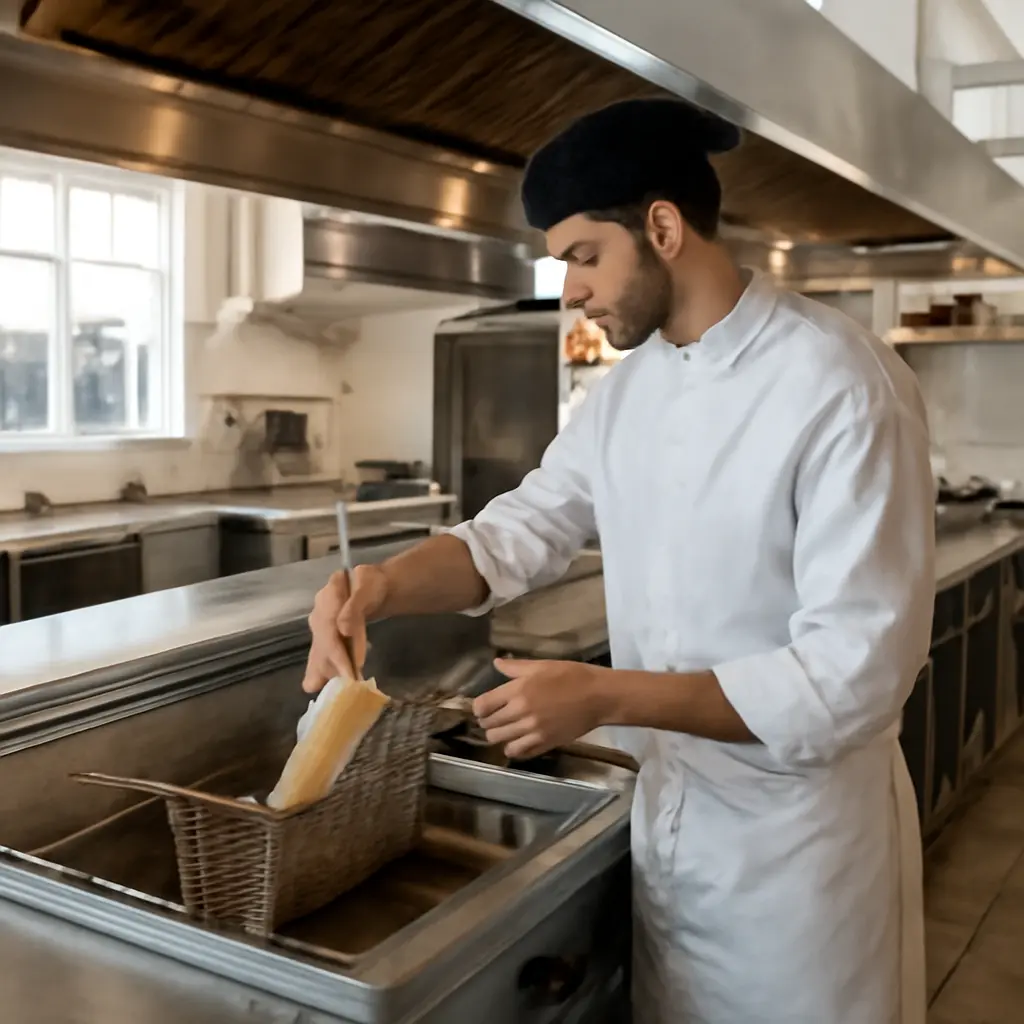
Commercial kitchens use purpose-built fryers to recover heat quickly and maintain consistent batches. At home, a heavy pot and a thermometer can approximate that control. The target is approximately 350°F (175°C), with adjustments as needed to keep the temperature from falling too far after fish is added.
The secret to crisp batter
A common restaurant-style batter combines flour with a little cornstarch, baking powder, salt, and very cold sparkling water or beer. Flour provides structure; cornstarch reduces gluten development and encourages a lighter bite; baking powder helps the coating puff. Cold liquid slows gluten formation, while carbonation can contribute bubbles. These ingredients support crispness, but technique and oil temperature remain decisive.
Mix only until the dry ingredients are moistened. A few small lumps are preferable to vigorous whisking, which can make the coating tougher. Dust the fish lightly with flour before dipping it in batter so the coating has a dry surface to grip. Fry promptly rather than letting the battered portions sit.
Oil temperature, batch size, and doneness
Use a neutral, high-heat oil such as canola or peanut oil, and monitor it with a deep-fry thermometer. Add only a few pieces at a time. If the oil temperature drops substantially, the batter absorbs more oil before it firms; if it is too hot, the exterior may brown before the center is cooked.
Fry pieces until golden and cooked through, turning them if needed for even color. Timing varies with thickness, batter, and equipment, so use appearance as a guide rather than a guarantee. Check the thickest portion with a food thermometer and reach 145°F (63°C). Set cooked fish on a wire rack rather than stacking it or leaving it on a flat plate, where trapped steam softens the crust.
Fries, seasoning, and serving
For a crisp contrast, cut potatoes evenly and dry them well. Many kitchens fry chips twice: a lower-temperature first cook softens the interior, and a hotter second fry browns the outside. At home, cook fries in manageable batches and season them as soon as they leave the oil so salt adheres.
Serve the fish promptly with lemon, vinegar, and tartar sauce. A wire rack preserves the crust better than a covered dish, while keeping the fish separate from fries prevents steam from softening both. For a lighter plate, add slaw or peas; these accompaniments also provide freshness against the fried coating.
A Practical Restaurant-Style Mahi Mahi Fish and Chips Method
This home method applies the same principles used in professional kitchens: dry fish, restrained batter mixing, controlled oil temperature, and a safe doneness check. It makes about four servings.
Ingredients and preparation
- 1½ pounds mahi mahi fillets, cut into evenly sized pieces
- 1 cup all-purpose flour, plus a little extra for dusting
- ¼ cup cornstarch
- 1 teaspoon baking powder
- ¾ teaspoon salt, plus more for finishing
- About 1 cup very cold sparkling water or beer
- Neutral oil for frying
- Potatoes, lemon wedges, and tartar sauce for serving
Thaw frozen fish in the refrigerator, then pat it dry and check for bones. Cut the fish into portions of similar thickness. Prepare the fries first or keep them warm on a rack in a low oven, and arrange a wire rack near the cooking area before heating the oil.
Fry the fish
- Heat several inches of oil in a heavy pot to about 350°F (175°C). Do not fill the pot more than halfway.
- Whisk the flour, cornstarch, baking powder, and salt together. Stir in cold sparkling water or beer just until combined; the batter should coat a spoon but remain pourable.
- Dust each dry fish portion lightly with flour, dip it in batter, and let excess batter drip back into the bowl.
- Lower the pieces carefully into the oil without crowding the pot. Fry until crisp and golden, turning as needed for even cooking.
- Check the thickest piece with a food thermometer. The fish should reach 145°F (63°C). Transfer it to the wire rack and season lightly while hot.
- Serve immediately with fries, lemon, and tartar sauce.
Hot oil can cause serious burns. Use a deep, stable pot, keep water away from the oil, lower food gently, and never leave the pan unattended. If oil begins smoking, turn off the heat and allow it to cool; do not pour water onto hot oil.
Conclusion: The Mahi Mahi Fish and Chips Secret
Restaurant-quality mahi mahi fish and chips comes down to choosing firm fish, drying it thoroughly, mixing a light batter without overworking it, and frying in small batches at a controlled temperature. Because mahi mahi is lean and cooks quickly, checking the center for the recommended 145°F (63°C) helps protect both safety and texture. Sourcing also matters: consult fishery-specific guidance instead of assuming every mahi mahi product has the same environmental profile.
Try the method with evenly cut portions, a thermometer, and a wire rack, then adjust batter seasoning and accompaniments to taste. For more informed seafood choices, consult current FDA fish advice and a regional seafood sustainability guide.
Sources: U.S. Food and Drug Administration, Advice About Eating Fish, https://www.fda.gov/food/consumers/advice-about-eating-fish; FoodSafety.gov, Safe Minimum Internal Temperature Chart, https://www.foodsafety.gov/food-safety-charts/safe-minimum-internal-temperatures; Monterey Bay Aquarium Seafood Watch, Seafood Recommendations, https://www.seafoodwatch.org/recommendations; U.S. National Oceanic and Atmospheric Administration Fisheries, Mahi Mahi, https://www.fisheries.noaa.gov/species/mahi-mahi